
Introduction
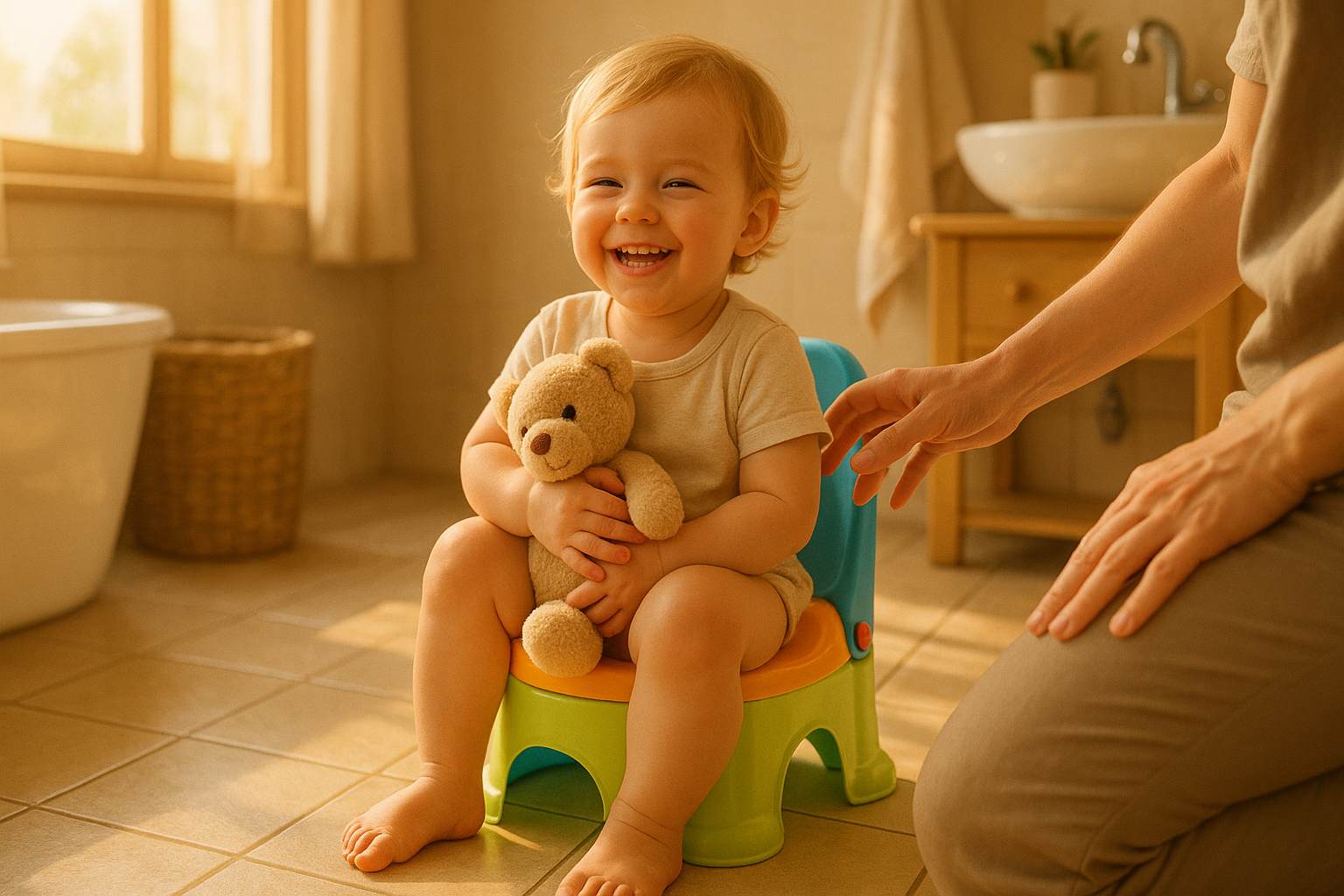
If your toddler refuses potty training, you’re in good company. Many parents hit this roadblock, often feeling frustrated, helpless, or worried their child is “falling behind.” I’ve been there with four kids, and let me assure you, refusal is not failure. It’s your toddler’s way of saying, “I need more time, comfort, or control.”
With the right gentle strategies, this stage can turn from stressful to manageable. Below, I’ll share step-by-step solutions based on real-life parenting, including my own tested routines and mistakes to avoid. Think of this as advice from a senior mom who’s walked through every messy stage and made it to the other side.
Step 1: Understand Why Your Toddler Refuses Potty
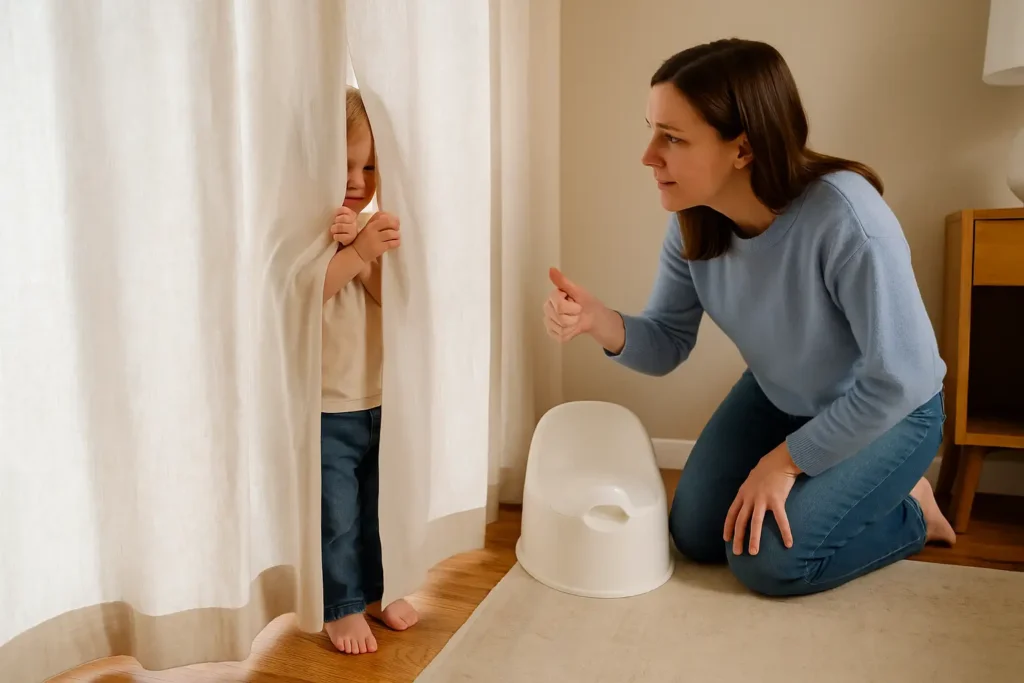
Toddlers rarely refuse just to be “difficult.” Their reasons are often simple and rooted in feelings. Common causes include:
- Fear of the potty: It’s big, loud, or unfamiliar.
- Control struggles: Toddlers crave independence and want to decide when and how.
- Timing issues: Some kids simply aren’t ready developmentally.
Tip #1: Don’t take refusal personally. This isn’t a reflection of your parenting. It’s part of your child’s journey toward independence.
Step 2: Build a Gentle Potty Routine
Children feel safe with routines. Instead of asking randomly, schedule potty time during predictable moments:
- After breakfast.
- Before bath.
- Right before bedtime.
Real-life example: My son refused potty time for three weeks. What worked was adding “potty before bath” into his evening routine. We didn’t pressure him. We simply said, “It’s potty time.” One night, he finally relaxed and went on his own.
Tip #2: Keep it short. Five minutes is enough. Longer sessions can feel like punishment.
Step 3: Make the Potty Inviting and Safe
Sometimes toddlers refuse potty because it feels unfriendly. A few small changes can make a big difference:
- Let your child pick their potty chair.
- Add a basket of books or toys nearby.
- Keep the potty in a warm, cozy spot, not a cold bathroom.
Mistake to avoid: Forcing your toddler to sit when upset. This builds negative associations and makes the potty feel like punishment.
Tip #3: Praise effort, not just results. A clap or high-five for sitting down goes a long way.
Step 4: Use Modeling and Play as Gentle Tools
Children copy what they see. If your toddler refuses to potty, show them how it’s done in playful, pressure-free ways:
- Let them see siblings or parents use the toilet.
- Use dolls or stuffed animals to “go potty” first.
Example from my home: When my daughter resisted, I placed her teddy on the potty chair. She laughed, then wanted her turn.
Tip #4: Play wins over pressure. Humor and role-play break down fear faster than lectures.
Step 5: Offer Choices to Reduce Battles
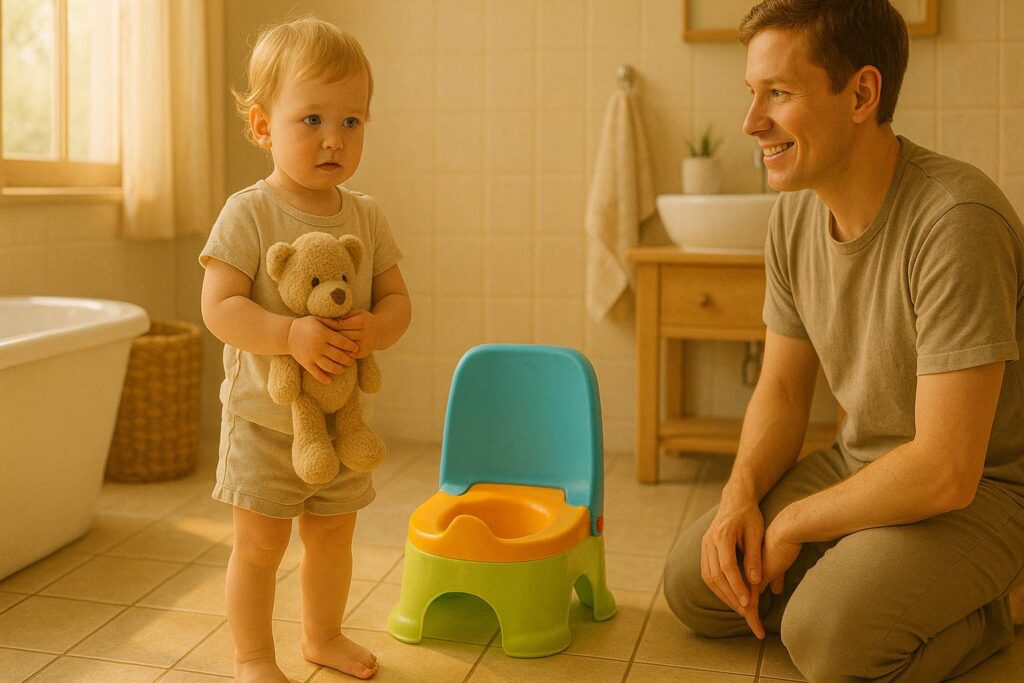
Refusal is often about control. Instead of forcing, offer small decisions that make your child feel in charge:
- “Do you want the red potty or the blue potty?”
- “Should we read a book or sing a song while you sit?”
- “Now or in two minutes?”
This shifts the dynamic from resistance to cooperation.
Tip #5: Respect their voice. Even tiny choices give toddlers dignity and reduce battles.
Step 6: Watch for Readiness and Know When to Pause
Not all refusal means “never.” Sometimes, it just means “not yet.” If your toddler refuses to potty with tears, stress, or fights for several weeks, pause. A break of two to four weeks can make a huge difference.
Mistake to avoid: Comparing your child to others. Each child has their own timeline, and pressure usually delays success.
Step 7: Celebrate Small Wins Without Pressure
The journey isn’t about a single “big success.” Instead, look for small milestones:
- Willingly sitting on the potty.
- Telling you they’re wet.
- Asking to watch someone else use the potty.
Every step deserves recognition. This builds confidence without overwhelming your child.
Conclusion
When your toddler refuses to potty, it’s easy to feel defeated. But with gentle steps, consistent routines, playful encouragement, and respect for readiness, you’ll get there. Potty refusal is just one chapter in the story, not the ending.
Want all 9 gentle potty training solutions I’ve used as a senior mom? Unlock the full guide for just $9.99 and gain step-by-step strategies that truly work.
Also read: 10 Potty Training Questions Every Parent Asks (With Gentle, Proven Solutions)
Also read: 5 Gentle Steps to Help Your Toddler Sleep Better (Without Tears)
FAQs For a Toddler Refuses Potty
Q1: What should I do if my toddler refuses potty every time?
Take a break and reintroduce slowly. Gentle, playful routines often work better than pushing. Focus on comfort and confidence before results.
Q2: Is it normal for toddlers to be scared of the potty?
Yes, many children fear the potty because it feels big and unfamiliar. A smaller chair, modeling, and role-play can ease those fears.
Q3: How long does potty refusal usually last?
It can last from a few days to several weeks. Staying calm, using routines, and avoiding pressure usually shortens the phase.
Q4: Should I reward my toddler for potty success?
Simple rewards like clapping or stickers can help. Avoid heavy bribes that shift motivation away from self-confidence.
Q5: Can forcing my toddler to use the potty backfire?
Yes. Forcing can create power struggles and delay success. Gentle encouragement and patience are far more effective.
Read this story on mobile


0 Comments